Choosing a career starts with understanding yourself. Discover seven ways students can identify their strengths, explore interests and make informed career decisions.


7 Powerful Ways to Discover Student Strengths for Career Choice
Everyone is choosing a career. But who is helping students discover what they are naturally good at?
Engineering, medicine, business, management, IT, law and studying abroad have become familiar career conversations in many households. Students are surrounded by advice, career trends, social media success stories, parental expectations and peer pressure.
But before asking a student to choose a career, perhaps we need to ask a more fundamental question:
Have they discovered their own strengths yet?
Choosing a profession without understanding personal abilities, interests, values and learning styles can make career planning confusing. This is why understanding student strengths for career choice should be one of the first steps in a student’s educational journey.
A successful career is not simply about choosing a popular profession. It is about discovering the intersection of what a student enjoys, what they can develop, what motivates them and where they can create value.
Why Student Strengths for Career Choice Matter More Than Ever
Students today have more career options than previous generations. Technology, artificial intelligence, global education, entrepreneurship, creative industries and emerging professional roles continue to expand the world of opportunities.
However, more options do not automatically lead to better decisions.
Many students can name their dream university, preferred country or future salary, but struggle to explain:
What are they genuinely good at?
What type of problems do they enjoy solving?
What activities make them feel confident?
Do they enjoy working with people, ideas, numbers, technology or creativity?
What skills do they want to develop further?
Understanding student strengths for career choice allows students to make decisions based on self-awareness rather than simply following what is trending.
The OECD career guidance framework highlights the value of helping young people understand themselves and the world of work, and of exploring career possibilities through meaningful experiences.
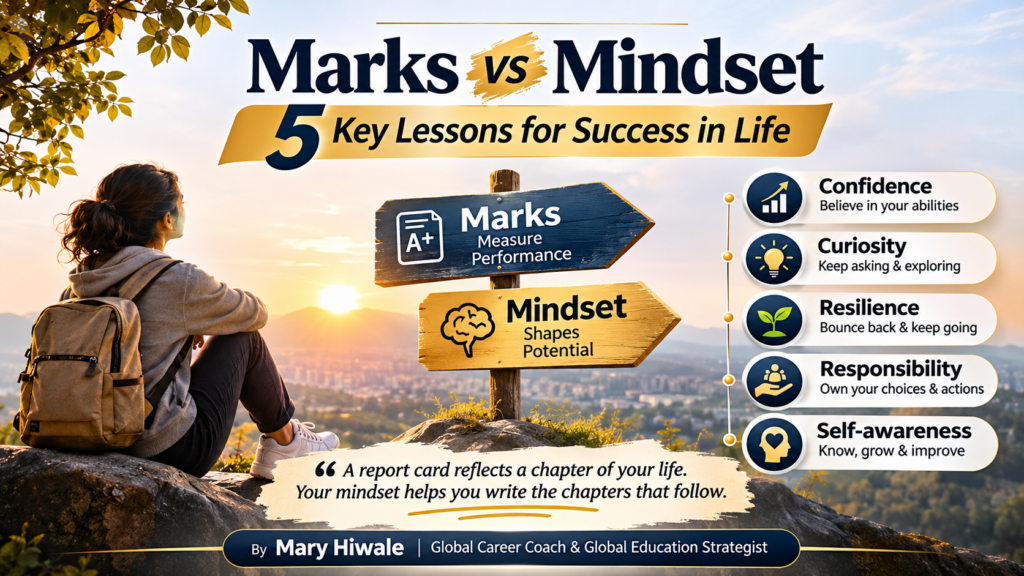
1. Look Beyond Marks and Academic Performance
Marks are useful. They help evaluate academic progress and can play an important role in admissions. But marks alone cannot explain a student’s complete potential.
A student who scores average marks may be an exceptional communicator, creative thinker, leader, entrepreneur or problem-solver.
Another student with excellent academic results may still be exploring what genuinely interests them.
Parents and educators should therefore look beyond report cards when identifying student strengths for career choice.
Observe how a student performs in different situations:
Do they explain concepts to others confidently?
Are they naturally curious about how things work?
Do they enjoy organising activities?
Can they solve problems creatively?
Are they good at resolving conflicts?
Do they notice details others overlook?
Academic performance tells us something about learning outcomes. Everyday behaviour can reveal much more about abilities, interests and potential.
2. Identify What Comes Naturally to Them
Some strengths appear naturally during everyday activities.
A student might enjoy creating presentations, planning school events, building things, helping friends, writing stories, solving puzzles or experimenting with technology.
These activities may look like hobbies, but they can reveal valuable abilities.
| Student behaviour | Potential strength to explore |
|---|---|
| Explains difficult topics to friends | Communication & teaching |
| Organises events and group activities | Leadership & planning |
| Enjoys puzzles and logical problems | Analytical thinking |
| Creates designs, videos or stories | Creative thinking |
| Helps others resolve disagreements | Empathy & interpersonal skills |
| Builds, repairs or experiments | Technical & practical aptitude |
| Notices small errors quickly | Attention to detail |
| Starts new ideas and projects | Initiative & entrepreneurship |
These are not fixed career labels. They are starting points for exploration.
Discovering student strengths for career choice should never mean putting a student into a box. It should help them explore more possibilities.
3. Understand the Difference Between Interest, Skill and Strength
Students often say, “I like this subject, so I want to make it my career.”
Interest is a great starting point, but career exploration should consider more than one factor.
Interest: What do I enjoy doing?
Skill: What can I perform well right now?
Strength: What abilities do I demonstrate consistently, and what can I develop further?
Values: What matters to me in my future work and life?
A student may enjoy photography but may not yet understand the technical or commercial side of the industry. Another student may not have considered public speaking as a strength until they participate in a debate or presentation.
A balanced approach to student strengths for career choice involves exploring these areas together instead of relying on a single favourite subject.
Students can also use structured exploration tools like the O*NET Interest Profiler to identify work-related interests and discover occupations that may connect with their preferences.
4. Give Students Real Experiences, Not Just Advice
Self-discovery rarely happens through conversations alone.
Students need opportunities to try things.
Participate in debates. Join science projects. Volunteer. Attend workshops. Try coding. Create a small business idea. Interview professionals. Take part in internships, job-shadowing or career exposure programmes where appropriate.
Experiences help students discover what they enjoy and what they don’t.
A student who believes they want to become a doctor may discover an interest in medical research, healthcare management, psychology or biotechnology. A student interested in business may discover they enjoy marketing, financial analysis, product design or entrepreneurship more than general management.
Experiential learning makes student strengths for career choice more visible because students begin to understand themselves through action.
The OECD’s work on career development also emphasizes exploring potential futures and gaining first-hand exposure to the world of work.
5. Pay Attention to Personality and Work Preferences
Not every successful career requires the same personality or working style.
Some students thrive in collaborative environments. Others prefer independent work. Some enjoy structured tasks, while others are motivated by experimentation and uncertainty.
Understanding preferences can help students explore different environments.
Ask questions such as:
Do I enjoy working in a team or independently?
Do I like routine or variety?
Am I comfortable making decisions?
Do I prefer practical activities or theoretical concepts?
Do I enjoy helping, creating, investigating, organising or persuading?
These questions do not predict success with certainty. They help students reflect and identify environments where they may feel motivated.
For student strengths for career choice, personality should be considered as a guide—not a restriction.
MIT’s career self-assessment resources explain the value of reflecting on skills, interests, personality and values when exploring career direction.
6. Encourage Students to Explore Careers Before Selecting Courses
One of the most common mistakes is selecting a course without understanding the professions connected to it.
Before choosing a degree, students should explore:
What subjects will I study?
What practical skills will I learn?
What careers could this qualification lead to?
What does a typical working day look like in these careers?
What further qualifications may be required?
What industries hire people with this background?
Does this course fit my interests and abilities?
Career exploration can include professional interviews, university open days, online career resources, workplace visits and discussions with experienced professionals.
The objective of student strengths for career choice is to create a more informed match between a student’s potential, education and future opportunities.
Students planning higher education or international studies should also explore course mapping and academic pathways to connect their interests with appropriate education options.
7. Let Students Discover—Don’t Decide for Them
Parents naturally want their children to have secure, successful and rewarding futures. Their guidance can be invaluable.
However, guidance becomes more effective when it includes listening, questioning and exploration rather than making every decision on a student’s behalf.
Instead of saying:
“You should become an engineer.”
Try asking:
“What type of problems do you enjoy solving?”
Instead of:
“Choose this course because it has scope.”
Try:
“Let’s understand the skills, opportunities and demands of this field together.”
Instead of comparing students:
“Your cousin is doing better.”
Try:
“What have you discovered about your own strengths this year?”
This shift creates space for confidence, ownership and more thoughtful decision-making.
A Simple Strength Discovery Exercise for Students
Students can begin their self-discovery journey by answering these five questions honestly:
What activities do I enjoy even when nobody asks me to do them?
What do friends, teachers or family members regularly ask me for help with?
What are three things I have done that made me feel proud?
What type of challenges do I enjoy solving?
Which skills would I like to improve over the next year?
Write the answers down. Look for patterns. Discuss them with a mentor, teacher, parent or career counsellor.
These reflections are not a final career assessment. They are the beginning of a deeper understanding of yourself.
For further self-exploration, students can try the O*NET Interest Profiler, an online career exploration resource that connects work interests with potential occupations.
How Career Guidance Can Help Students See Their Potential
Career guidance should be more than a list of courses or university options.
It should help students explore their interests, strengths, abilities, values and the realities of different career pathways. Effective career development combines self-reflection with information, exploration and real-world experiences.
Resources such as the O*NET Interest Profiler can help students explore work interests. The OECD Career Guidance resources also provide valuable perspectives on career exploration and development.
Students who understand themselves better can ask more meaningful questions, evaluate opportunities more confidently and take greater ownership of their future.
For students who need structured support, exploring career and portfolio mentorship can help turn self-discovery into an actionable education and career roadmap.
The Future Doesn’t Belong to One Career—It Belongs to Prepared Students
The world of work is changing. New technologies are transforming industries, and many future opportunities may look different from today’s jobs.
Instead of preparing students only for one job title, we should help them develop adaptable skills, curiosity, confidence, communication, problem-solving and the ability to keep learning.
The best career plan is not always the one created at age 16 and followed without change. It is one that grows as students discover new interests, build new abilities and understand the world better.
When we focus on student strengths for career choice, we help students move beyond comparison and begin building a future that reflects their own potential.
Final Thoughts: Let Strengths Lead the Direction
Every student has a different combination of abilities, interests, experiences and ambitions.
Some students discover their strengths early. Others need more time, encouragement and exposure to different opportunities.
There is no need to rush every student into a fixed career decision.
What matters is giving them the right environment to discover themselves, the right guidance to explore options and the confidence to make informed choices.
Before choosing a career for a student, let’s help the student understand who they are.
Because the right career doesn’t begin with a job title.
It begins with self-discovery.
Mary Hiwale | Global Career Coach
Frequently Asked Questions
1. Why are strengths important when choosing a career?
Understanding strengths helps students identify their abilities, interests and working styles. It can help them explore career options that align with their personality, skills and aspirations rather than choosing a profession only because it is popular.
2. How can students identify their strengths?
Students can identify strengths through self-reflection, hobbies, school projects, extracurricular activities, feedback from teachers, practical experiences and career assessments.
3. Do academic marks determine a student’s career?
Academic marks are important for evaluating progress and meeting university entry requirements, but they do not represent every student’s creativity, leadership, communication, practical ability or potential.
4. When should students start career planning?
Career exploration can begin during school years. Early exploration gives students more time to understand themselves, explore subjects, develop skills and make informed academic decisions.
5. Can career interests change over time?
Yes. Students may discover new interests and abilities as they gain experiences, learn new subjects and understand different industries. Career planning should be flexible and regularly reviewed.
6. How can parents help their children choose the right career?
Parents can support children by listening, encouraging exploration, exposing them to different careers, discussing strengths without comparison and allowing children to participate in their own decisions.
7. Is career counselling only for students who are confused?
No. Career counselling can also help confident students validate their choices, discover opportunities they haven’t considered, understand their strengths and create a structured academic and career roadmap.